
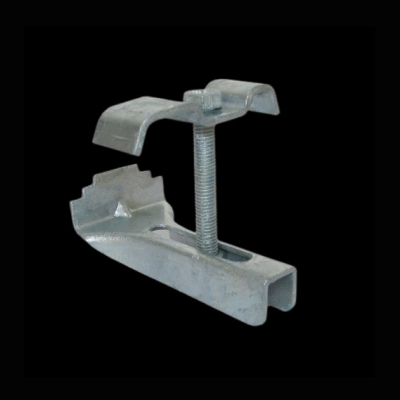
MS/HDG/SS GRATING CLAMP
MS, HDG and stainless-steel grating clamps for project-specific fixing requirements
A grating clamp is a compact mechanical fixing used to hold a grating panel to its supporting steelwork. It may be small compared with the walkway, platform or trench cover around it, but it performs an important job: resisting unwanted panel movement while keeping the grating removable when inspection or maintenance access is required. Shree OSR Enterprises supplies MS, hot-dip galvanized and stainless-steel grating clamp requirements for industrial buyers, contractors, fabricators, maintenance teams and project procurement departments across India.
This is not a universal one-size product. The correct assembly depends on the grating material, bearing-bar depth and thickness, mesh opening, support profile, available access, exposure conditions and the project’s fastening detail. A buyer should therefore treat “MS/HDG/SS grating clamp” as the beginning of a specification, not the complete specification. Sending a drawing, sample photograph or measured connection at enquiry stage helps the supplier identify a compatible top clip, lower component, bolt, nut and washer arrangement.
A practical option for controlled, generally dry service conditions or projects where the required protective finish is specified separately. Confirm the precise steel grade and surface condition before ordering.
Selected when zinc-coated protection is required for exposed steelwork. The coating requirement, applicable standard and compatibility with the grating should be stated in the purchase enquiry.
Used where corrosion resistance, hygiene or appearance is a stronger priority. Specify the required stainless grade—commonly 304 or 316 only when the project calls for it—rather than requesting “SS” alone.
The purpose of this page is to help a technical buyer define the requirement accurately. It does not replace the grating manufacturer’s installation instructions, an approved project drawing or engineering review. Clamp quantity, spacing and tightening requirements must be decided from the actual panel, support geometry, loads, vibration, uplift risk and governing project documents. For wider sourcing, visit the complete industrial hardware shop, learn about Shree OSR Enterprises, or send the connection details for a written commercial response.
Protect the clamp set between delivery and installation
Correctly specified hardware can still reach the work front damaged, mixed or incomplete. Grating clamps are compact, often supplied in large quantities and easily separated from their matching bolts and lower pieces. A simple storage and issue plan protects traceability and reduces improvised substitutions.
Receive by complete set
Check packages against the packing list and purchase order. Confirm the quantity basis—sets, pieces or kilograms—and open a representative pack to verify its component bill. Record shortage, transit damage, wet packaging or mixed labels promptly.
Keep grades separated
Store MS, HDG and stainless parts in clearly marked locations. Similar dimensions and surface colours can cause accidental mixing. Protect stainless components from carbon-steel grinding debris and dirty handling where contamination control matters.
Keep components dry
Use covered, ventilated storage off the ground. Do not leave small hardware in standing water or sealed wet packaging. White corrosion products on zinc, rust on carbon steel or staining on stainless should be assessed before installation rather than hidden by wiping.
Issue in controlled quantities
Provide crews with labelled kits or work-area quantities tied to the drawing. Count unused and removed parts at shift close, particularly on elevated platforms. Loose hardware left on a grating surface can become a trip or dropped-object hazard.
If a custom clamp was approved from a first article, keep an identified master sample and the signed drawing away from normal site stock. Do not let the master become a replacement part. For repeat orders, compare the incoming batch with the controlled dimensions and revision, not merely with whichever loose clip happens to remain in the store. Record who released each batch to site, where it was installed and how many spare sets remain. This small control helps future maintenance teams identify the correct replacement without repeating the entire specification exercise.
Grating clamp types: translate the trade name into a connection detail
Industrial buyers encounter several overlapping names. A local fabricator may call a formed top piece an M clamp, another catalogue may call it a saddle clip, and a proprietary system may use a model-specific name. The safest approach is to describe what the fastener must engage and how it must be installed. The summaries below are orientation points—not a promise that every manufacturer uses the terms identically.
M clip or saddle clip
An M-shaped or saddle-style top component normally spans adjacent bearing bars and is secured by a bolt, self-drilling fastener or lower component, depending on the system. It distributes contact across more than one bar and is widely associated with steel or FRP grating. The saddle width, valleys, central hole and fastener length must match the panel. A clip that bridges bars but rests on a cross bar can appear installed while failing to seat properly.
When ordering, state whether only the top clip is needed or a complete fixing set. Also state whether the receiving structure may be drilled. Some saddle arrangements use a screw into the support, while others work with a lower clamp. Those are materially different site operations.
G clip or lower-jaw fastener
G-clip terminology is frequently used for a fastener with a lower gripping element that catches a structural flange and connects to a top piece. Certain designs allow work from above and avoid drilling or welding the supporting member. However, flange thickness, edge clearance, panel opening and installation access define whether the jaw can enter and rotate into engagement.
Do not assume the letter G identifies a standardized geometry. Proprietary G-style fasteners can have different tops and lower bodies for close spacing, different bar heights or vertical members. Quote the model or drawing when replacing a known system.
J clip, L clip or single-bar hold-down
Narrow hold-down clips may capture one bearing bar where spacing does not permit a wider saddle. Some are used with a threaded fastener through or into the support; others hook around a member. Because the contact is concentrated differently from a two-bar saddle, the project detail must approve it. A narrow clip is not automatically a lighter or weaker product, but it is a different interface.
Measure the clear mesh opening, bar thickness and available swing space for the lower leg. Confirm whether the formed end bears on the correct face and whether installation can be inspected after tightening.
C clip or grating joiner
A C-style clip is often used to join adjacent grating panel edges to one another, particularly in molded grating systems. Joining panels is not the same as anchoring them to structural support. A project may need both panel connectors and hold-down clips, each at different locations and spacing.
Ask whether the requirement is to control differential movement between adjacent panels, restrain an outside edge, or connect the assembly to a beam. This simple functional distinction prevents a joiner from being incorrectly priced or installed as the primary support fixing.
W clip or plate-grating fixing
Grating with a solid plate, checker plate or covered top may prevent an ordinary saddle from seating between open bars. A washer-style or purpose-designed covered-grating fastener can spread load over the top surface while connecting to a lower component. Plate thickness, total panel depth, hole requirement and slip-resistant surface all affect selection.
Any penetration through a covered panel must follow the approved drawing and may need sealing or coating repair. Do not drill solely to make an available clamp fit.
Fabricated top and bottom clamps
Heavy, unusual or restricted connections sometimes use a project-specific formed plate, hooked lower piece and selected fastener. Custom does not merely mean changing bolt length. Bends, hole edge distance, material direction, coating allowance, contact area and installation sequence need a controlled drawing.
Start with a prototype or first-article check on a representative panel and support. Freeze the approved geometry and revision before production, then label later deliveries so field teams do not mix visually similar versions.
Describe the load path in plain language: “top clip spans these bars; lower component engages this flange; this fastener joins them; installation occurs from this side.” Add a dimensioned section. Once that is clear, a supplier can map local names and available patterns to the functional requirement without depending on a possibly ambiguous letter designation.
Compare grating clamp quotations on total installed value
Unit price matters, especially across thousands of fixing points, but the lowest line item can become expensive when it arrives without the lower component, uses the wrong bolt length, needs field modification or lacks project-required documents. Commercial evaluation should normalize the scope before ranking vendors.
First confirm that every bidder is quoting the same unit: one complete set, the same material and finish, the same thread and component list, the same inspection evidence and the same delivery basis. Then distinguish stock availability from production lead time. A supplier may have a similar clip on hand but need to produce the approved size or grade. “Available” should mean available against the controlled specification.
Consider labour. A connection that is easier to position with the access available on site can reduce installation time, but only if the system is approved and installers understand it. Conversely, an inexpensive loose-part assembly can create counting, handling and drop hazards on elevated work. Preassembled or clearly packed sets may justify a modest premium.
- Price of every complete clamp set
- Freight, taxes and special packing
- Sample, tooling or drawing-development cost
- Incoming inspection and documentation review
- Installation tools, access and labour
- Coating touch-up or site modification
- Spare and replacement inventory
- Maintenance inspection and retightening
- Removal time during shutdown work
- Cost of delays from mismatch or rejection
A lifecycle comparison does not automatically favour the most expensive material. The best value is the compliant solution that fits the exposure, design life, access strategy and maintenance plan without paying for performance the project does not need.
Supplier capability
Can the supplier interpret a connection drawing, distinguish complete sets from top clips, confirm component materials and manage a sample-approval process? Clear technical communication at enquiry stage is a practical indicator of order-control quality.
Revision control
Custom and repeat orders should reference an approved drawing revision or retained master sample. A product name alone cannot stop an unnoticed bend, hole or bolt change from entering a later batch.
Scalable packaging
Ask how sets are counted, protected and labelled. Packages may need lot, material, finish, size, quantity and purchase-order reference. Site-ready packaging reduces time spent sorting small mixed hardware.
Delivery planning
Link dispatches to the installation sequence. A phased project may benefit from scheduled lots rather than one early bulk delivery that creates storage exposure and loss risk.
Change management
Define the approval route for substitutions. A different clip may be commercially attractive but can change engagement, tools, coating compatibility or maintenance procedure. Technical acceptance must precede use.
After-supply traceability
Retain quotation, drawing, certificates, batch information and installation guidance in the asset record. Future maintenance teams then have a reliable starting point for replacement instead of measuring a corroded mystery part.
This page serves one national product intent with meaningful specification, selection, installation, quality and maintenance guidance. It does not create near-duplicate city pages or promise local stock everywhere. Buyers from Delhi NCR and other Indian locations can use the same technical checklist, then request a delivery-specific quotation. Explore industrial fasteners and construction hardware, review the stone fixing anchor guide for an example of specification-led sourcing, or contact Shree OSR Enterprises with the grating clamp connection package.
A controlled grating clamp installation workflow
Installation must follow the approved drawing and the instructions for the supplied fastener. The sequence below is a planning checklist for supervisors and procurement teams; it deliberately avoids invented torque figures, universal spacing rules or a claim that every clip installs in the same way.
Verify the approved materials
Check product type, quantity, dimensions, grade, finish and set components against the purchase order and drawing before moving them to the work front. Segregate damaged, deformed or incorrectly coated pieces. Confirm that the supplied bolt length suits the actual grating and support stack.
Make the work area safe
Isolate the area below and around open floor panels. Use the site’s permit, fall-protection, lifting and lockout procedures. Removing or adjusting a grating panel can create an immediate opening hazard; procurement content cannot define the safe system of work for a particular site.
Inspect grating and support
Confirm the panel sits fully on sound supporting steelwork, is correctly oriented and has the clearances required by the design. A clamp should not be used to pull a distorted panel into place or compensate for a missing, corroded or misaligned support.
Position the top component
Seat the shaped top clip at the intended location so it engages the correct bars and does not rock on a cross bar. Keep it clear of damaged bar edges. On serrated grating, confirm the supplied profile is intended for the surface rather than forcing a smooth saddle over incompatible teeth.
Engage the lower fixing
Place or rotate the lower clip, jaw, bracket or nut into its designed position under the support. Confirm complete engagement visually where possible. Do not assume a partly caught flange will become correct as the bolt is tightened.
Tighten using the specified method
Align threads by hand before applying tools. Tighten to the manufacturer’s or project’s stated requirement, using calibrated equipment where required. Under-tightening can permit movement; excessive force can strip threads, deform the top clip, damage coating or overload a thin bar.
Inspect the completed panel
Check every specified location, not just one corner. Confirm the panel is stable, clips are seated, threads have adequate engagement, loose items are removed and coating damage is handled through the approved repair procedure. Record inspection when the quality plan requires it.
Plan reinspection
New installations may settle or respond to early vibration. Establish an inspection interval based on service severity and project requirements. Reinspection is particularly important after panels are removed, plant work is completed or nearby structural modifications occur.
Some online guides offer a typical number of fasteners per panel or square metre. Actual quantity and spacing depend on panel size, support layout, loading, vibration, uplift, edge conditions and the selected system. Use the approved grating layout and responsible engineer’s requirements. For a general visual explanation of top and lower clip placement, consult this independent steel grating installation guide, then defer to the instructions for the product actually purchased.
Quality checks that matter more than a polished catalogue image
A grating clamp should be evaluated as a working set. Appearance can reveal obvious damage, but it cannot prove chemistry, coating compliance, dimensional compatibility or load suitability. Define acceptance evidence in the enquiry so the supplier can quote against the correct requirement.
Dimensional consistency
Check critical width, formed profile, hole position, component reach, bolt diameter and length against the controlled drawing or approved sample. A small dimensional change can affect seating and thread engagement.
Form and workmanship
Look for cracks at bends, burrs, sharp edges, severe distortion, incomplete forming, damaged threads and weld defects where welding forms part of a component. Acceptance limits must come from the agreed specification.
Material identity
Where grade is contractually important, request the relevant material documentation and maintain batch traceability. A magnet, colour or surface shine is not reliable proof of a stainless grade.
Coating condition
Review zinc coverage, runs that obstruct fit, bare areas, flaking, handling damage and thread operation. Required test method and permissible repair should be agreed before dispatch.
Thread compatibility
Confirm bolt and nut thread series, pitch, class or tolerance where specified. Components should assemble without cross-threading. Coated threads require particular attention to fit.
Set completeness
Define whether each unit includes top clip, lower clip, bolt, nut and washer. Count sets rather than loose pieces and specify whether parts must be preassembled for site handling.
Sample fit-up
For a new or custom pattern, trial the proposed set on a representative grating-and-support mock-up before approving a bulk order. A drawing review is valuable, but physical interface checks can expose access and seating problems.
Packaging and identification
Small parts are easily mixed or lost. Ask for sealed, labelled packs by type, grade and size; protect finished components from moisture and impact; and maintain lot identity where inspection records depend on it.
Documentation options to state in the RFQ
- Approved product or fabrication drawing
- Material test certificate when required
- Coating declaration or test evidence
- Dimensional inspection report
- Sample approval or first-article inspection
- Batch or lot identification
- Certificate of conformity
- Third-party inspection requirement
- Packaging and marking schedule
- Installation information supplied with the set
Not every order needs every document. Requiring unnecessary paperwork can increase time and cost, while omitting essential evidence can delay site approval. Classify the connection and ask for the documentation required by the project quality plan. Shree OSR Enterprises can review the commercial supply scope when these requirements are included in the initial enquiry.
Inspection, maintenance and common grating clamp problems
The service life of a fastening system depends on environment, installation, use and maintenance. An inspection should consider the clamp, grating and support together. Replacing a corroded clip without addressing trapped water, chemical deposits or a damaged support only resets the symptom.
The panel moves or rattles under traffic
The top clip rotates or does not sit flat
The lower component cannot reach the beam flange
Threads seize during installation or removal
Rust appears on or around the fixing
A clamp is missing after maintenance work
Routine visual check
Look for missing, loose, rotated, corroded or damaged parts; panel movement; debris accumulation; and changes to adjacent steelwork.
Event-driven check
Inspect after panel removal, impact, abnormal vibration, flooding, chemical release, nearby modification or reports of movement/noise.
Planned detailed review
Use the site’s risk-based interval to verify representative fasteners, coating condition, documented corrective work and any trend by location.
Build a quote request that can be priced accurately
“Need grating clamp, best price” leaves the main cost and fit variables unresolved. A useful RFQ allows the supplier to compare the same requirement that your technical team has approved. It also reduces the risk of receiving attractive unit prices for incomplete sets, the wrong material or a profile that cannot be installed.
State whether the requirement is a new installation, replacement of an existing clip, planned shutdown stock or a custom-development request. If a brand or drawing reference is mentioned, clarify whether it is mandatory, a compatibility reference or “or equivalent subject to approval.” Never send a third party’s proprietary drawing unless you are authorized to share it.
For bulk or repeat supply, include annual or phased quantity, required lot size and call-off pattern. Ask separately for sample cost, production quantity price, taxes, freight, documentation, tooling if custom, lead time and quotation validity. Comparing a delivered, documented set against an ex-works loose component prevents false savings.
Email the completed requirementCopy this grating clamp RFQ checklist
Frequently asked questions about MS, HDG and SS grating clamps
What is another name for a grating clamp?
Depending on shape and market terminology, buyers may search for grating clip, grating fixing clamp, grating fastener, saddle clip, M clip, G clip, hold-down clip, flooring clip or walkway grating clamp. These names are not always interchangeable. Match the exact configuration to the grating and support rather than buying by keyword alone.
Can one clamp fit every steel grating panel?
No. Fit depends on bar spacing, bar depth and thickness, cross-bar position, support geometry, bolt length and access. Two panels that look alike in a photograph can require different components. Send dimensions or an approved drawing before ordering.
Is an HDG grating clamp the same as a galvanized clamp?
Hot-dip galvanizing is a specific zinc-coating process; “galvanized” may be used loosely for different zinc finishes. If coating route, thickness or test standard matters, write it explicitly in the specification. Do not rely on the abbreviation GI or a silver-grey appearance.
Should I choose SS 304 or SS 316?
The correct stainless grade depends on exposure, cleaning chemicals, chloride level, temperature, design life and the surrounding metals. SS 316 is often considered for more chloride-prone environments, but no grade should be selected from a simple indoor/outdoor rule. Follow the project material schedule or obtain qualified corrosion advice.
Can grating clamps replace welding?
Mechanical clamps can provide a removable alternative where the grating system and project design approve them. They are not automatically equivalent to every welded detail. The responsible designer must select the fastening method and layout for the relevant loads and service conditions.
How many grating clamps do I need per panel?
There is no safe universal answer. Quantity depends on panel dimensions, number and direction of supports, edge conditions, traffic, vibration, uplift and the selected fastening system. Use the approved layout or obtain a project-specific determination from the grating supplier or engineer.
Can grating clamps be installed from above?
Some fastener systems are designed for top-side installation, while traditional sets may need access to position or hold a lower component. Confirm this feature for the exact offered pattern. “Top access” can also mean most—not necessarily every—installation step occurs above.
Do stainless grating clamp bolts need anti-seize?
Stainless threaded assemblies can be susceptible to galling, but any lubricant or anti-seize affects friction and therefore tightening behaviour. Use only a product and procedure approved by the fastener manufacturer or project specification. Do not add lubricant while continuing to apply a dry-thread torque value without engineering confirmation.
What should be included in one clamp set?
A set may include a top clip, lower clip or jaw, bolt, nut and washer, but configurations vary. State the bill of materials in the RFQ and quotation. Confirm whether the unit price is per complete set or per loose component.
Can I order a custom grating clamp from a sample?
A sample can help establish form, but it should be supported by critical dimensions, material, finish, thread information, intended interface and approval criteria. A worn or corroded field sample may no longer represent the original geometry. Custom production should pass drawing and sample approval before bulk manufacture.
What documents can be requested with a bulk order?
Depending on contract needs, buyers may request a drawing, certificate of conformity, material test certificate, coating record, dimensional report, batch identification, inspection note or third-party release. Agree the required documents before price and production are finalized.
Does Shree OSR Enterprises deliver grating clamps across India?
Send the required quantity, package expectation, delivery PIN code and required date for a dispatch review and quotation. Freight mode, transit, stock or production status and partial-delivery options should be confirmed in the written commercial offer rather than assumed from the product page.
Send the grating-and-support details—not just the product name
Share the grating type, dimensions, support profile, material or coating, complete-set requirement, quantity, documentation and delivery location. Shree OSR Enterprises will review the commercial supply requirement and identify any missing information needed to progress a clear quote.
What a grating clamp does—and what it does not do
Open bar grating works as a system. Bearing bars carry load toward the supports, cross bars maintain spacing and panel integrity, and the supporting steelwork transfers forces into the wider structure. A clamp does not increase an undersized grating panel’s load capacity and it cannot correct inadequate support. Its role is to secure the panel at the intended support points so that normal service does not allow it to walk, rattle, lift or become displaced.
A typical mechanical set may include a shaped top clip that bridges or bears against adjacent bars, a lower clip or gripping component, a threaded fastener and matching nut or washer. Exact components vary. Some arrangements need access below the grating; some can be operated mainly from above. Some suit conventional open steel bar grating; other clip families are intended for close-mesh, chequer-plate-covered, FRP/GRP or special profiles. A product selected only by appearance can fit poorly even when it seems visually similar.
Controls panel movement
A compatible clamp draws the grating toward the support and helps restrain movement at the fixed location. This matters on platforms exposed to footsteps, wheeled maintenance activity, machinery vibration or repeated removal and replacement.
Supports a removable installation
Mechanical fastening can preserve access below a panel. That is useful around service trenches, equipment decks and utilities where welding every panel would complicate future inspection. “Removable” does not mean tool-free or casually opened: controlled isolation and safe work procedures still apply.
Avoids unnecessary field welding
A mechanical grating fixing can reduce reliance on on-site welding where a clamp solution is approved. This may help preserve an existing protective coating and simplify later removal. Whether hot work is prohibited or merely inconvenient is a project decision.
Creates an inspectable connection
The condition of an accessible clip, bolt and nut can be checked during scheduled maintenance. Inspection should look for missing parts, loss of tightness, deformation, coating damage, corrosion, panel wear and changes to the support—not just whether a clamp is still present.
Mechanical fasteners are one recognized way to secure metal grating; industry guidance also identifies welding as a common method. For an independent overview, see Grating Pacific’s guide to fastening metal bar grating. The project engineer, grating manufacturer or approved drawing should determine which method is acceptable for the actual installation.
MS vs HDG vs SS grating clamps: choose for the environment, not the abbreviation
Material selection affects corrosion behaviour, maintenance expectations, appearance and price. It also affects compatibility with the panel, support and companion hardware. The following table is a procurement framework, not a substitute for the project’s corrosion study or material schedule.
| Option | Where it may fit | What to confirm | Common purchasing mistake |
|---|---|---|---|
| Mild steel (MS) | Indoor, sheltered or controlled installations; fabricated assemblies receiving a separately specified finish; cost-sensitive general industrial work where the design permits it. | Steel grade, supplied surface condition, required paint/plating/coating, storage protection and whether all set components use a compatible finish. | Assuming bare MS has the same outdoor service behaviour as a hot-dip galvanized part. |
| Hot-dip galvanized (HDG) | Outdoor structures and many general industrial environments where a durable zinc coating is specified for fabricated steel hardware. | Base steel, galvanizing after fabrication or component treatment route, coating specification, thread fit after coating, repair method and documentation. | Writing “GI” or “galvanized” without identifying the exact required process or acceptance criteria. |
| Stainless steel (SS) | Wet, hygienic, coastal or chemically challenging locations when the selected stainless grade is suitable for that exposure. | Exact grade such as 304 or 316 only where required, fastener grade, finish, traceability, risk from chloride exposure and compatibility with adjacent metals. | Believing every stainless grade performs identically in every corrosive environment. |
Hot-dip galvanizing requirements should be connected to the actual purchase specification. ISO 1461:2022 covers general properties and test methods for hot-dip galvanized coatings on fabricated iron and steel articles, within its stated scope. A buyer should not claim compliance merely because a component looks galvanized; request the applicable standard and evidence when the contract requires it.
Material mixing needs deliberate review. Stainless steel and zinc-coated or carbon-steel components can create different corrosion cells when electrically connected in the presence of moisture. The severity depends on surface-area ratio, electrolyte, exposure and detailing, so a blanket rule is rarely adequate. Match the clamp set to the grating and support material specified by the responsible designer. For a broader site guide, read Threaded Rod Types: ACME vs EN8 vs GI vs Stainless Steel, which explains related material-selection logic for threaded hardware.
Seven measurements that decide whether a grating clamp will fit
A product name cannot describe the interface between a particular panel and beam. Record these details before comparing price.
1. Grating construction
State whether the panel is welded or press-locked metal bar grating, serrated grating, close-mesh grating, plate-covered grating, FRP/GRP or another form. A clip designed around two open bearing bars may not engage a covered or unusually tight mesh.
2. Bearing-bar depth and thickness
Measure the vertical depth and metal thickness of the load-carrying bars. Do not use overall panel thickness as a substitute. These dimensions affect the bolt length, top-clip seating and lower-component reach.
3. Bearing-bar spacing
Record centre-to-centre spacing and the clear opening. The top piece must sit correctly without rocking, crushing an edge or interfering with a cross bar. A clear photograph with a ruler is useful but a dimensioned drawing is better.
4. Support geometry
Identify the member below: beam flange, channel, angle, flat or frame. Give flange width and thickness where the lower element grips it. Also show obstructions, edge distance and the direction of the grating bars relative to the support.
5. Access for installation
Confirm whether installers can reach the underside. Top-access systems can be valuable over tanks, trenches or elevated decks, but “top access” must be verified for the exact clamp pattern rather than assumed from a catalogue image.
6. Exposure and temperature
Describe indoor or outdoor service, moisture, washdown, coastal salt, process chemicals and unusual temperature. The word “industrial” is not enough: a dry warehouse and a chemical processing deck present very different material demands.
7. Movement and loading conditions
Note foot traffic, carts, machinery vibration, wind uplift, removable panels and any accidental loading considered by the design. Do not ask a supplier to infer clamp spacing from panel area alone.
8. Contract requirements
Include the approved drawing, required standards, inspection plan, material certificate needs, coating acceptance, packaging, marking and delivery schedule. Commercially similar clamps may not be contractually equivalent.
Send one overall view, one close-up of the existing connection, a section sketch through grating and support, all key dimensions, material/finish, quantity, delivery PIN code and required date. If an existing clamp is being replaced, include its assembled and disassembled photographs. Shree OSR Enterprises can then review the supply requirement without relying on a vague “same size” description. You can also source compatible structural hardware such as hex bolts, MS/HDG/SS/HT long nuts and slotted C channels where they form part of the wider approved assembly.
Where grating fixing clamps are used
The same purchasing principle applies across sectors: define the panel, support, exposure and service condition before choosing the fastener. The application examples below explain why projects buy clamps; they do not mean a single clamp configuration is automatically suitable for every installation in that industry.
Industrial platforms and mezzanines
Factories and warehouses use steel grating on elevated access floors, service decks and mezzanines because it allows drainage, light and ventilation. Fasteners help keep removable panels seated at supports. Areas exposed to moving equipment or vibration need special attention to the approved fixing detail and inspection interval.
Power and utility plants
Generating stations, substations and utility facilities may have cable routes, equipment platforms and maintenance walkways built with grating. Procurement should identify outdoor exposure, electrical-site restrictions, coating requirements and whether access below the panels is needed during future shutdowns.
Oil, gas and process facilities
Process areas can combine moisture, chemicals, temperature and strict hot-work control. Mechanical clips may be valuable where the engineering specification approves them, but material selection must come from the actual corrosion environment—not a generic assumption that “stainless is enough.”
Water and wastewater works
Treatment plants use grating around channels, tanks, pumps and screening equipment. Constant humidity, splashing and treatment chemicals make material grade and maintenance access central selection factors. The project should also address fall protection and safe removal of panels.
Marine and coastal infrastructure
Jetties, ports and coastal plants can expose hardware to airborne or direct chlorides. An exact stainless grade or engineered protective system may be necessary. Ask the responsible designer to assess crevices, deposits, dissimilar-metal contact and cleaning access as part of durability planning.
Drainage and service trenches
Trench covers are frequently lifted for inspection, so removable fasteners can support controlled access. The design must account for the cover’s bearing, traffic or pedestrian load, edge support and lifting procedure. A clamp cannot make an unsuitable trench cover safe.
Rooftop and solar access
Grated routes around rooftop equipment or solar installations may face wind, rain and temperature cycling. The fastening plan should consider uplift, thermal movement, waterproofing interfaces and safe inspection. A general-purpose indoor clip should not be carried into this duty without review.
Food, beverage and pharmaceutical plants
Washdown, hygiene and contamination controls can influence material, finish and cleanability. Stainless selection alone does not resolve hygienic design; avoid inaccessible debris traps and confirm whether the clamp arrangement is acceptable under the facility’s sanitation procedure.
Transport and public infrastructure
Rail, metro, airport and bridge service areas often combine vibration, weather exposure and controlled documentation. Traceability, approved drawings and inspection records may matter as much as unit price. Substitutions should follow the contract’s approval process.
Browse the Shree OSR product range or contact the team with the complete connection sketch. Related products may share a material label but serve different structural functions. A grating clamp holds a panel at a support; it should not be treated as an interchangeable substitute for a beam clamp, pipe clamp, cladding clamp or concrete anchor.