
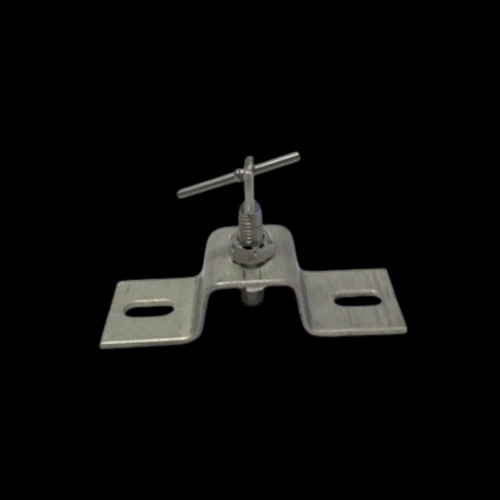
Stone Fixing Anchor
| Usage/Application | IndustrialConstruction |
|---|---|
| Materials Used | Material Grade |
| Material Grade | SS 304 SS202 |
| Thickness | M3 TO M5 |
Stone anchoring, specified before it is supplied
Stone fixing anchors for a cladding system that must work as one
A stone fixing anchor is small compared with the panel it supports, yet it sits at one of the most important interfaces in the façade: between the stone, the cavity and the building structure. Choosing it by shape or price alone is not enough. The correct order begins with the panel, substrate, exposure, loads, fixing detail and installation method.
Shree OSR Enterprises supplies stone fixing anchors and associated cladding hardware for marble, granite and other natural-stone installations. The range includes commonly requested L anchors, Z anchors, body anchors and mortar anchors, together with project-specific brackets and clamps where a standard item does not match the approved detail. Stainless-steel options, including grades shown on the current product listing, can be discussed against the required environment and project specification.
This page is written for contractors, façade teams, stone processors, architects, purchasing departments, distributors, fabricators and project engineers who need more than a generic product label. It explains how to prepare a purchase requirement, distinguish one anchor family from another, coordinate related components and identify the checks that belong in an installation and inspection plan.
The anchor is only one part of the connection. Its performance is influenced by its material and geometry; the stone type, thickness and edge condition; the kerf, hole or slot; the cavity and stand-off; the concrete, masonry or subframe behind it; the associated fastener; workmanship; corrosion exposure; and the forces defined by the project engineer. For that reason, Shree OSR Enterprises does not treat an unqualified description such as “SS stone anchor” as a complete technical specification.
For a useful quotation, share the stone and panel details, anchor shape, dimensions or controlled drawing, material grade, required finish, substrate, cavity, quantity, delivery city and documentation needs. If the design is still being developed, say so. The sales discussion can then focus on available manufacturing and supply options without presenting a commercial quotation as an engineering approval.
Connection logic
What a stone cladding anchor actually does
A façade anchor is not simply a metal clip that stops a stone panel from moving. In an engineered system, different connection points may carry gravity, control inward or outward movement, accommodate tolerances, or connect a secondary support to the main structure. Those functions must be understood before the metal is cut, bent or drilled.
The stone interface
The anchor meets the panel through a kerf, drilled hole, pin, dowel, slot, rebate or another approved detail. The location and workmanship of this interface matter because natural stone is not a uniform manufactured sheet. Veins, fissures, laminations, repairs, edge distance and local damage can change how it behaves.
The anchor body
The anchor shape bridges from the stone to its support. Its bends, projection, width, thickness, holes, slots and welds determine how it fits the cavity and how forces travel through it. An L or Z description identifies a form, not a universal capacity.
The connecting fixing
A bolt, screw, threaded rod, channel nut, expansion anchor, chemical anchoring assembly or embedded connection may secure the bracket. This fixing must suit the actual concrete, masonry or subframe and be compatible with the anchor material and environment.
The building support
The load path finishes in a substrate or supporting frame that must be verified. Concrete condition, masonry strength, steel thickness, channel location, reinforcement, edge distance and installation access can all affect the approved detail.
Gravity support and restraint are related but not identical jobs. Some anchors are arranged to support vertical dead load; others restrain lateral movement; and some details combine functions. Wind pressure and suction, building movement, thermal change, installation tolerance and project-specific actions also have to be considered. A stone panel should not be assumed to “hang from every anchor equally” unless the engineered detail expressly establishes that behaviour.
The current product range includes stone fixing anchors as well as adjacent systems such as dry stone cladding clamps and façade fixing clamps. These pages are useful for comparing product families, but the approved project detail remains the controlling reference for selection.
Four useful starting families
L, Z, body and mortar anchors—similar purpose, different detailing
The names below are practical catalogue families. Within each family, geometry can change substantially. Dimensions, bends, slots, pins, holes, stand-off and companion fasteners must therefore be stated on the enquiry rather than inferred from the product name.
L-shaped stone anchors
An L anchor or angle-style bracket changes direction through a formed bend. Depending on the engineered arrangement, one leg connects toward the backing structure or subframe while the other interfaces with or supports the stone. The simple profile is useful where a clear right-angle relationship and accessible fixing point are required.
- Suitable for details needing an offset, seat or perpendicular connection.
- May include round holes, elongated slots, pins, welded elements or project-specific leg lengths.
- Bend radius, leg dimensions and hole position must match the approved cavity and load path.
- Compare the dedicated L clamp and L and T stone cladding clamp options when preparing the bill of materials.
Z-shaped stone anchors
A Z anchor uses two changes of direction to create an offset between connection faces. This can help bridge a defined cavity or coordinate two parallel planes. Z profiles are frequently searched for marble and stone cladding, but the letter alone does not describe whether an item provides bearing, restraint, adjustment or a particular stone connection.
- Useful when the stone face and supporting connection sit on offset planes.
- Overall depth, leg lengths and orientation should be taken from a dimensioned drawing.
- Do not reverse an asymmetric Z detail on site unless the design permits it.
- See the marble fixing Z clamp and Z cladding clamp for closely related catalogue choices.
Body anchors
“Body anchor” commonly describes a more developed bracket body used to span a cavity and connect stone to the supporting construction. A body may include adjustment slots, separate pins, welded components or a shaped bearing end. The number of components makes coordination especially important: a body without the correct bolt, pin, nut, washer or backing connection is not a complete assembly.
- Often considered where a defined projection or greater adjustability is needed.
- Body width and thickness influence stiffness, but should never be used as a stand-alone capacity shortcut.
- Slots can aid tolerance; they also require correct washer bearing and final positioning.
- Every weld, fastener and dissimilar-metal interface should be included in material and inspection requirements.
Mortar anchors and embedded ties
Mortar anchors or ties are intended for details in which part of the anchor is embedded or engaged in a mortar joint or masonry arrangement. They differ from a bracket that is post-fixed to a concrete wall or bolted to a metal subframe. Joint geometry, embedment, backing construction and installation sequence therefore become central to selection.
- Coordinate with the masonry or stone laying sequence before material reaches site.
- Confirm the compatible mortar, joint thickness, embedment and corrosion exposure.
- Protect the intended bond or embedment zone from oil, mud and site contamination.
- Do not substitute a mortar anchor for a mechanically fixed bracket without design review.
Material is an exposure decision
Choose the stainless-steel grade with the environment, not the label, in mind
The current stone fixing anchor listing mentions stainless-steel grades including SS 202 and SS 304. A buyer should still confirm the exact grade on the quotation and purchase order. “Stainless steel” is a family of alloys, and different grades do not provide identical corrosion behaviour in the same façade.
| Material route | Where it may be considered | Questions to settle before ordering | Procurement caution |
|---|---|---|---|
| SS 202 | Cost-sensitive, controlled applications where this grade is expressly accepted by the project specification and exposure assessment. | Is the installation interior or exterior? What is the moisture, pollution, chloride and cleaning exposure? Has the consultant accepted the grade? | Do not treat 202 as automatically interchangeable with 304. State the grade explicitly and request the required material documentation. |
| SS 304 | Common architectural and general exterior applications in many non-marine environments, subject to the project designer’s corrosion assessment. | Will the anchor be concealed in a damp cavity? Are de-icing salts, industrial pollutants or chloride-bearing cleaners present? Is water drainage reliable? | “304” should appear on the order, documentation and inspection requirements; the word stainless alone is incomplete. |
| SS 316 | More demanding chloride, coastal, marine, wash-down or chemical exposures where the specification calls for enhanced pitting resistance. | How close is the site to salt exposure? Are all companion bolts, nuts, washers, pins and welded parts compatible? Is fabrication followed by the required cleaning or passivation process? | Specifying a 316 bracket while using a lower-grade or incompatible connector can leave the assembly limited by its weakest component. |
| Other specified metal or finish | Only where the project drawings, durability plan and connection design define it. | Is the protection integral or a coating? Can cutting, drilling or welding damage it? Are touch-up and inspection procedures stated? | Never select a finish solely by colour. Confirm material, grade, coating system, thickness requirement and compatible hardware separately. |
Corrosion happens at interfaces
A concealed anchor can still be exposed to moisture, salts, polluted runoff, stone treatments, cleaning chemicals and wet insulation. Crevices around washers, slots and contact faces may dry slowly. Dissimilar metals in electrical contact can create galvanic corrosion when moisture is present. Coordinate the bracket, bolt, nut, washer, pin, weld filler, subframe and any isolation material as one durability package.
Grade, strength and finish are different fields
A material grade does not by itself define anchor geometry, load resistance or installation performance. Likewise, a thicker item is not automatically the correct item. Read the site’s detailed guide to MS, HDG, stainless-steel and heat-treated fasteners when coordinating the anchor with its connecting fasteners.
Fabrication must preserve the requirement
- Confirm whether cut edges, drilled holes and formed bends need special treatment.
- Specify weld procedure and post-fabrication cleaning when welded components are involved.
- Prevent iron contamination during storage, fabrication and installation.
- Keep grade identification and batches traceable if the project demands it.
Ask for the evidence your project needs
- Material test certificate or certificate of conformity, where required.
- Dimensional inspection against the approved drawing.
- Finish or passivation documentation if specified.
- Batch, packing and marking arrangements suitable for site verification.
From exterior façades to interior feature walls
Stone fixing anchors can be part of many assemblies, but the same item should not be assumed suitable for every one. Panel size, height, substrate, cavity, exposure, accessibility and consequence of failure change from application to application.
Exterior stone façades
Marble, granite and other dimension-stone panels used on building envelopes need an anchoring concept that addresses gravity support, wind actions, moisture, durability, movement and inspection. The façade engineer’s approved elevations, sections and fixing schedules should drive the order.
Interior lobby and feature walls
Interior work can still be safety-critical, especially above circulation spaces. Wall construction, panel height, impact risk, fire strategy, cavity restrictions and maintenance access should be reviewed rather than assuming an indoor location makes any anchor acceptable.
Columns, piers and returns
Narrow faces, corners and returns create tight geometry. Anchor orientation, edge distance in the stone, substrate access and coordination between adjacent faces become especially important. Right- and left-handed pieces should be identified in packing lists when the detail is not symmetrical.
Renovation and replacement panels
Existing substrates and concealed construction may differ from record drawings. Survey the opened condition before final manufacture. Replacement work often benefits from clearly marked anchor types and adjustable details, but any deviation from the original design requires responsible engineering review.
Commercial and institutional projects
Hotels, offices, retail buildings, hospitals and public facilities may impose detailed submittal, sample, test, traceability and inspection requirements. Procurement should allow time for approvals and mock-ups instead of treating the anchor as a last-minute consumable.
Stone on a metal support system
Where channels, rails or fabricated subframes form the backing, the anchor must coordinate with slot direction, channel nuts, bolts, washer bearing, tolerances and metal compatibility. The complete assembly should be shown in one detail, not split across disconnected purchase orders.
Marble and granite are not interchangeable design inputs. Natural variability, strength, veining, anisotropy, porosity, thickness and fabrication details can change the approved anchoring arrangement. Record the precise stone and finish in the enquiry and preserve approved panel orientation where required.
Explore marble fixing bracketsHow to select a stone fixing anchor without guessing
Start with the joint, not the catalogue. The sequence below turns an incomplete request into a specification that a supplier can quote and a project team can review. It also reduces the doorway-page problem common in thin product descriptions: this page answers the real task behind the search—how to identify and procure the correct item.
What stone and panel are being fixed?
Record the stone trade name and geological type where known, source, finish, panel length and width, nominal thickness, approximate weight, orientation, edge condition and any resin, mesh or repair. State whether the connection uses a kerf, hole, pin, rebate or another fabrication. A photograph is useful; a dimensioned panel drawing is better.
What must each anchor point do?
Identify which locations provide gravity support, lateral restraint or another designed function. Note the load cases and any movement or tolerance assumptions defined by the façade engineer. Do not divide panel weight by the number of anchors and call the result a design load; stiffness, geometry and installation tolerances can prevent equal load sharing.
What is behind the stone?
Confirm the cavity, insulation, waterproofing, concrete or masonry substrate, cast-in channel, steel rail, bracket or other subframe. Include substrate strength and condition where relevant. If the backing has not been exposed in renovation work, carry out an approved survey before releasing final fabrication.
Which geometry fits the approved detail?
Choose the anchor family only after the connection planes and access are clear. Define projection, leg lengths, width, thickness, bends, hole diameters, slots, pins, welds and tolerances. If adjustment is needed, show its direction and range. The SS stone cladding clamp range may be relevant, but the final item must match the detail rather than a product photograph.
What environment must the assembly survive?
State interior or exterior location, distance from marine exposure, humidity, industrial pollution, cleaning chemicals, wet insulation risk and intended service life. Select the grade and companion metals through the project durability assessment. Include isolation washers or sleeves only when they are specified and compatible with the connection.
Which fixing connects the anchor to the support?
Define the bolt, screw, rod, channel nut or anchoring system and check edge distance, spacing, embedment, fixture thickness and installation access. If concrete anchoring is part of the assembly, compare the site’s wedge anchors and chemical anchor fasteners only after the engineer has chosen the appropriate fixing principle.
What approvals and records are required?
List drawings, samples, mock-ups, material certificates, dimensional reports, coating or passivation documents, weld records, test reports, traceability, packaging labels and inspection hold points. Confirm who approves substitutions and how revisions will be communicated from design to purchase, production, delivery and installation.
Related products are not automatic substitutes
A stone fixing anchor may be ordered beside clamps, brackets, channels, bolts, nuts, washers and concrete anchors. Internal links below help buyers assemble the enquiry, but each linked product has a different job. Similar-looking hardware should only be substituted when the project designer accepts the complete revised connection.
Useful Shree OSR product routes
A controlled workflow for stone anchor installation
This sequence explains the quality logic of installation. It is intentionally general: the approved shop drawings, project method statement, stone fabricator’s instructions, exact anchor technical data and responsible engineer’s directions must supply the project-specific dimensions, forces, tolerances, fastener settings and acceptance criteria.
Verify the latest documents
Match the work area, elevation, panel mark, anchor mark and drawing revision. Check the approved material grade, anchor orientation, support and connecting fastener. Quarantine superseded drawings and mixed batches so the installer cannot select by appearance alone.
Inspect the substrate and interfaces
Confirm that concrete, masonry, cast-in channel or metal subframe is in the assumed location and condition. Check access, edge distance, reinforcement or concealed-service conflicts, waterproofing and insulation. Report deviations before drilling or altering brackets.
Inspect the stone fabrication
Verify panel identity, dimensions, thickness, orientation, kerfs, holes, rebates and edge condition. Look for cracks, damaged corners, open veins or repairs around the anchor zone. Do not enlarge a slot, move a hole or grind an anchor interface without an approved repair or revised detail.
Set out the connection accurately
Transfer approved datums and panel lines. Check cavity, bracket projection and adjustment range before making permanent fixings. Slots are for defined tolerance, not for correcting unlimited survey error. Keep sufficient adjustment available for final alignment and movement where the design requires it.
Install the substrate fixing correctly
Use the stated drill, bit, hole size, depth, cleaning procedure, embedment and setting method for the exact mechanical or bonded anchor. Use calibrated tools when controlled torque is specified. Do not improvise with an adhesive, oversize fastener or extra packing to rescue a rejected hole.
Assemble compatible components
Install the specified bolt, nut, washer, pin, sleeve, isolation material and bracket. Confirm washer bearing across slots, thread engagement and component orientation. Protect stainless surfaces from carbon-steel contamination and do not mix grades from unmarked site containers.
Place, align and temporarily secure the panel
Use the approved lifting method and support the stone safely while connections are made. Keep hard tools from striking finished edges. Establish joints, line, level and plane without forcing a panel against an anchor. Packing, shims or setting material must be exactly what the detail permits.
Complete and lock the connection
Set pins, brackets, nuts, welds or approved locking features in the required sequence. Where slots allow movement, do not lock the wrong axis. Where a connection must be fixed, confirm it cannot slip. Apply sealant, mortar or approved setting compounds only at locations defined by the system.
Inspect before concealment
Record anchor identity, position, orientation, projection, material, fastener installation, washer bearing, weld condition and visible damage. Complete specified torque, pull-test, weld, dimensional or photographic records before insulation, closure pieces or adjacent panels hide the connection.
Close out nonconformities
Mark and isolate rejected work. Obtain an approved repair for misdrilled holes, cracked stone, damaged anchors, inadequate engagement, wrong grade or out-of-tolerance substrate. A silent site adjustment can change the load path and leave no reliable record for the building owner.
Stop work and request review when:
- The anchor or material grade does not match the schedule.
- The stone is cracked or damaged at the connection zone.
- The substrate differs from the approved design assumption.
- A fixing conflicts with reinforcement or a concealed service.
- The anchor requires unapproved bending, cutting or welding.
- A drilled hole is oversized, misplaced or cannot be cleaned.
- The bracket reaches the end of its adjustment before alignment.
- Fastener torque, embedment or technical data is unavailable.
- Dissimilar components or missing isolation are found.
- The connection will be concealed before required inspection.
What to inspect before anchors reach the façade
A good submittal creates a line of sight from design to delivered part. It defines what will be manufactured, how the result will be checked, what evidence accompanies it and how installers identify it. The level of documentation should match the contract, project risk and consultant requirements.
Dimensional control
Check width, thickness, leg lengths, projection, bends, angles, hole and slot sizes, hole centres, pin position, weld details and tolerances against the current approved drawing. Include the unit of measurement and inspection method.
Grade verification
State the exact alloy or material specification. Where certificates are required, connect the document to the batch or item marking. Prevent mixed or unidentifiable material from entering production or site stores.
Finish and condition
Inspect for cracks, severe scratches, sharp burrs, embedded contamination, scale, coating damage and unacceptable discolouration. Define deburring, cleaning, passivation or coating requirements in advance.
Bends, holes and welds
Verify that fabrication follows the agreed process and does not leave distorted holes, torn edges, uncontrolled heat tint or cracked bends. Welded items should meet the stated procedure, inspection and post-weld treatment requirements.
Compatible companions
Trial-fit the anchor with the specified bolt, washer, nut, pin, channel or other component. Check slot coverage, bearing, clearance, thread engagement and adjustment. The sample should represent the ordered assembly, not an isolated bracket.
Marking and packaging
Pack anchors to avoid deformation, mixing and surface contamination. Labels may need product code, material grade, drawing revision, batch, quantity, elevation, zone, handedness or panel group, depending on the installation plan.
Useful pre-production approvals
- Signed and revision-controlled shop drawing
- Material and finish confirmation
- Physical sample or first-off inspection
- Trial assembly with companion fasteners
- Agreed inspection and documentation plan
Useful delivery checks
- Purchase order against packing list
- Quantity by product code and batch
- Grade and certificate correlation
- Dimensions sampled to the agreed plan
- Damage, contamination and mixed-part inspection
Procurement teams can use the broader industrial fastener selection guide to coordinate load, material, grade, thread, finish, environment and documentation across the rest of the fastener package.
Ten shortcuts that can compromise a stone fixing system
Most connection problems are not caused by one dramatic mistake. They grow from small, unrecorded assumptions made during design handover, purchasing, fabrication or installation. The controls below keep those assumptions visible.
Ordering from a product photo
Two anchors can look alike while differing in thickness, grade, bend geometry, slot size or weld detail. Control: order against a dimensioned, revision-controlled drawing and item code.
Using “stainless steel” as the full grade
The phrase does not distinguish 202, 304, 316 or another alloy. Control: put the exact grade on the drawing, quotation, purchase order, certificate and inspection record.
Assuming thicker always means safer
Thickness affects behaviour, but so do projection, width, bend, load direction, stone connection and support. Control: use engineered geometry and verified product data, not a thickness-only rule.
Ignoring the companion fastener
A correct bracket paired with an unsuitable bolt, washer or substrate anchor is still an unsuitable assembly. Control: schedule the complete connection and trial-fit it before production release.
Treating every anchor as an equal support
Installation tolerance and stiffness can concentrate gravity load rather than share it equally. Control: distinguish support and restraint points in the engineer’s detail and preserve their roles on site.
Forcing a panel into alignment
Levering, over-tightening or unapproved packing can load the stone edge and distort the bracket. Control: survey the support, set out correctly and use only the designed adjustment range.
Modifying anchors at the workface
Extra bending, cutting, slotting or welding changes geometry and may damage corrosion resistance. Control: quarantine the item and obtain an approved repair or correctly fabricated replacement.
Overlooking water in the cavity
Concealed hardware may remain damp even when the façade looks dry. Control: coordinate drainage, material grade, compatible metals and contamination control through the durability plan.
Closing the façade before inspection
Critical connection details can become impossible to verify after the next panel or insulation layer is installed. Control: define hold points and photographic or signed inspection records.
Accepting silent substitutions
A different grade, washer, anchor family or coating can alter fit, durability and approved capacity. Control: route every substitution through documented design, commercial and quality approval before use.
Turn a requirement into a quotation that can be compared
A low unit price is not useful when two quotations cover different grades, dimensions, companion parts, documentation or packaging. Shree OSR Enterprises can review standard and drawing-based stone fixing anchor enquiries for project and bulk supply across India.
Send one consolidated schedule where possible. Separating the same assembly across several informal messages increases the risk of mismatched revisions and missing components.
Submit anchor requirementsQuotation checklist
Stone fixing anchor — Z form — drawing SFA-07 Rev C — SS 304 — dimensions and tolerances as drawing — 2,400 pieces — matching fastener/washer schedule attached — exterior granite cladding — delivery to [city/postcode] — material certificate and first-off dimensional approval required.For first-time industrial buyers, the article What are industrial fasteners? explains how anchors sit within the wider fastener family. Use it to align terminology between design, procurement and site teams.
Answers for specification, purchasing and site teams
These answers clarify common product enquiries without replacing the project engineer, approved shop drawings, exact product data or installation method statement.
What is a stone fixing anchor?
A stone fixing anchor is a metal component used within a mechanical attachment system for stone panels. It connects the stone—often through a kerf, hole, pin, slot or shaped edge detail—to a concrete, masonry or metal supporting construction. Depending on the engineered arrangement, an anchor point may provide gravity support, lateral restraint, adjustment or a combination of defined functions.
The term covers several geometries rather than one universal product. L anchors, Z anchors, body anchors, mortar anchors, pins, clamps and brackets may all appear in stone fixing schedules. The precise item must be identified through its drawing, dimensions, material and role in the complete system.
Which stones can be used with these anchors?
Stone fixing systems are commonly developed for marble, granite, limestone, sandstone and other natural or reconstituted stone products. Suitability cannot be decided from the stone name alone. Panel dimensions, thickness, strength, veining, bedding direction, porosity, repairs, mesh backing, fabrication and edge condition may affect the connection.
The stone supplier or testing laboratory should provide the properties required by the designer. Representative anchor locations or assemblies may need testing when specified. Do not assume a detail approved for one stone source is automatically suitable for another source or thickness.
What is the difference between an L anchor and a Z anchor?
An L anchor uses one principal change of direction and presents two legs, often at or near a right angle. A Z anchor uses two changes of direction to create an offset between two connection faces. Either form may be produced with different widths, thicknesses, leg lengths, holes, slots, pins or welded features.
The letter describes the profile, not its capacity or exact function. Selection depends on the connection planes, cavity, stone interface, support, adjustment and approved load path. Use a dimensioned drawing rather than ordering “L” or “Z” alone.
Is SS 304 suitable for exterior stone cladding?
SS 304 is widely considered for many architectural and general exterior uses, but the correct grade depends on the project’s corrosion assessment. Coastal chlorides, marine spray, industrial pollutants, cleaning chemicals, persistent moisture and poorly drained cavities can require a more resistant grade such as SS 316 when the designer specifies it.
Compatibility also matters. A 304 or 316 bracket should not be evaluated separately from its bolt, nut, washer, pin, weld and subframe. Confirm the precise alloy across the whole connection and obtain the documentation required by the project.
Can SS 202, SS 304 and SS 316 be substituted for one another?
No automatic substitution should be made. These grades have different compositions and corrosion behaviour. A change can also affect the approved material schedule, certificates, fabrication procedure and commercial basis. Submit the proposed substitution to the responsible designer and consultant, state the exposure, and obtain written approval before manufacture or installation.
Purchase orders should repeat the accepted grade in full. “Stainless steel” is not enough for reliable procurement or inspection.
What thickness stone fixing anchor should I buy?
There is no universal thickness that can be selected safely from panel weight alone. Anchor behaviour depends on material, width, projection, bends, slots, support conditions, loading direction and complete geometry. Stone and substrate details matter as well. The thickness shown on a project drawing should be followed together with every other dimension and material requirement.
If an existing anchor must be replicated, submit a measured drawing and sample where possible. Do not assume a catalogue notation such as “M3 to M5” means a particular millimetre thickness without written confirmation on the quotation.
How many anchors are required for each stone panel?
The quantity and layout must be designed for the specific panel and system. Panel dimensions, weight, stone properties, wind actions, seismic or impact requirements, connection stiffness, edge distances, support and restraint roles, building movement and applicable standards all influence the answer.
A generic number should not be copied from another project or product page. The façade engineer must show anchor locations and functions on approved drawings. Installers should not add, remove or relocate anchors without an approved revision.
Do you provide a universal load-capacity chart?
No generic chart should be used across different stone anchor geometries. A value for one tested or calculated product cannot be transferred to another width, thickness, projection, grade, fastener, substrate or load direction. Even the same bracket can behave differently when its cavity or support changes.
Use the approved data and calculations for the exact connection. Where project specifications require testing, define specimen construction, load direction, support, sample count, test method, acceptance criteria and reporting before the test begins.
Can a stone fixing anchor be installed directly into concrete?
Some systems connect a bracket to concrete through a separately selected mechanical or bonded anchor; others connect to cast-in channels, rails, masonry or metal subframes. The substrate fixing is a separate technical decision. Concrete strength and condition, cracking, reinforcement, edge distance, spacing, embedment, fixture thickness and installation access must be checked.
Never drill until reinforcement and concealed-service risks have been addressed through the approved site procedure. Use the exact fixing’s installation instructions, hole-cleaning method and controlled setting requirements.
Are stone fixing anchors the same as cladding clamps?
The terms overlap in everyday trade language, but they should not be assumed identical on a technical schedule. “Anchor” may refer broadly to a component transferring forces from stone to structure. “Clamp” may describe a particular gripping or bracket form. A project may use both words for similar products or distinguish them carefully.
Resolve the ambiguity with an item code, drawing and complete dimensions. The cladding clamp catalogue page can help identify adjacent products, but it does not authorize a substitution.
Can you manufacture a stone anchor from our drawing or sample?
Drawing-based enquiries can be reviewed for manufacturing and supply feasibility. A controlled drawing should show material grade, width, thickness, leg lengths, projection, bend angles and radii, holes, slots, pins, welds, tolerances, finish and quantity. Identify units and revision. State the required certificates, first-off sample and inspection plan.
A physical sample can help communicate form and workmanship, especially for replacement or repeat orders, but it may be worn, distorted or untraceable. Use it with measured and approved requirements rather than treating it as the only specification.
What information is needed to receive a stone fixing anchor price?
Provide the anchor type or drawing, exact material grade, all dimensions, finish, quantity for each variation, companion hardware, documentation, packaging, delivery location and required schedule. Add the stone, substrate, cavity and exposure so the supplier can identify obvious gaps or incompatible assumptions.
Price can change with alloy, metal thickness, fabrication complexity, holes and slots, pins or welds, finishing, inspection, batch size, packing and delivery. Compare quotations line by line rather than by piece rate alone.
How should stone anchors be stored at site?
Keep anchors dry, clean, labelled and protected from deformation or mixing. Separate product codes, grades, sizes, handed parts and batches. Do not store stainless-steel components where grinding dust, carbon-steel swarf, salt, acids or site chemicals can contaminate them. Preserve certificate and packing-list correlation.
Open packages in a controlled area and return loose parts to identified containers. Quarantine damaged, modified, rust-stained or unidentifiable items for review rather than putting them back into available stock.
What external design reference can a project team consult?
For exterior dimension stone anchoring, project professionals can review ASTM C1242, Standard Guide for Selection, Design, and Installation of Dimension Stone Anchoring Systems. The Natural Stone Institute also provides an authoritative dimension-stone resource library, including guidance on mechanical anchoring.
Applicable requirements depend on project location, contract documents and authority having jurisdiction. Standards and guides do not replace the responsible professional’s project-specific design.
Request stone fixing anchors against your actual project requirement
Send the anchor type or controlled drawing, stone and substrate details, dimensions, exact material grade, quantity, companion hardware, documentation needs, delivery city and required schedule. Shree OSR Enterprises will review the commercial supply requirement and respond with the information needed to progress a clear quotation.
Shree OSR Enterprises supplies industrial fasteners, anchors, clamps and construction hardware across India. Product suitability, connection design and installation acceptance remain subject to the project specification and responsible qualified professionals.